/ Dec 19, 2025
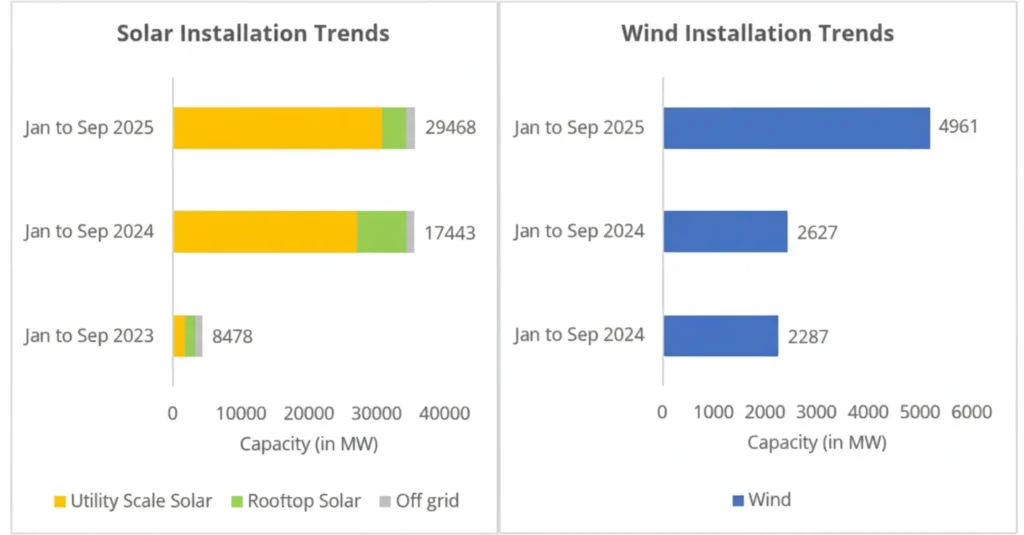
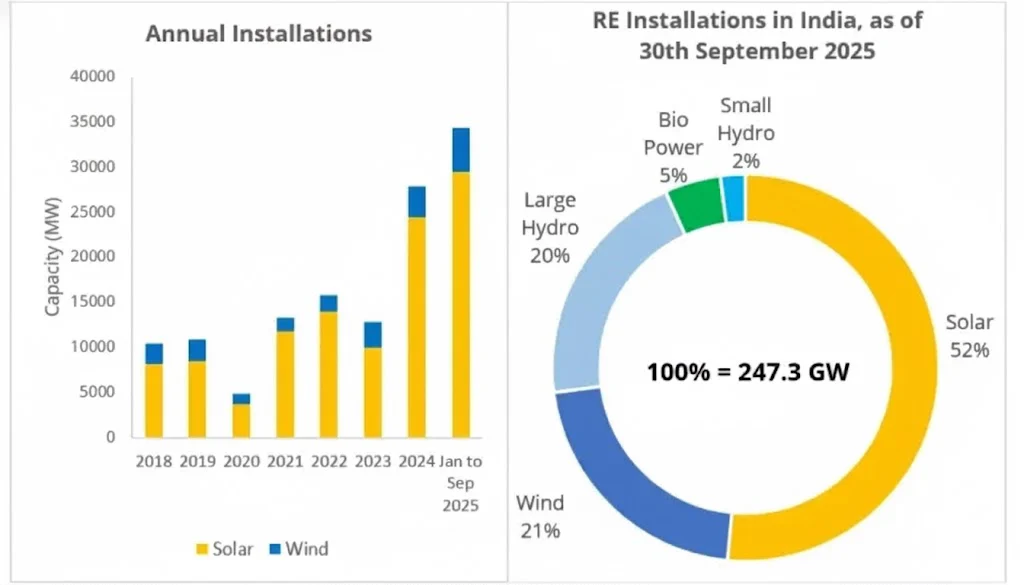
India’s renewable energy landscape reached a significant milestone in 2025, setting a new record for solar power capacity additions. According to multiple industry reports, the country installed a remarkable 29.5 gigawatts (GW) of solar energy capacity during the first nine months of the year. This achievement represents one of the largest annual growth spurts in India’s solar history and underscores the country’s accelerating transition toward a clean energy future.
The 29.5 GW installed between January and September 2025 marks a sharp increase compared to the same period in 2024, when installations stood at around 17 GW. This surge demonstrates India’s growing commitment to renewable energy, driven by both national policy support and falling solar technology costs.
Reports from leading industry trackers such as PV Magazine and PV Knowhow note that this growth has propelled India’s total cumulative solar capacity to well over 110 GW, putting the nation on track to meet — and potentially exceed — its ambitious renewable energy targets before 2030.
Much of this growth can be attributed to utility-scale projects, which accounted for nearly three-quarters of total installations. However, the rooftop solar and distributed generation segments have also contributed meaningfully, buoyed by state-level incentives and net metering reforms that have made small-scale solar increasingly attractive to residential and commercial users.
India’s rapid solar expansion in 2025 aligns closely with the central government’s renewed focus on energy independence and decarbonization. Programs under the National Solar Mission, alongside the Production-Linked Incentive (PLI) scheme for domestic solar manufacturing, have played pivotal roles in boosting capacity additions.
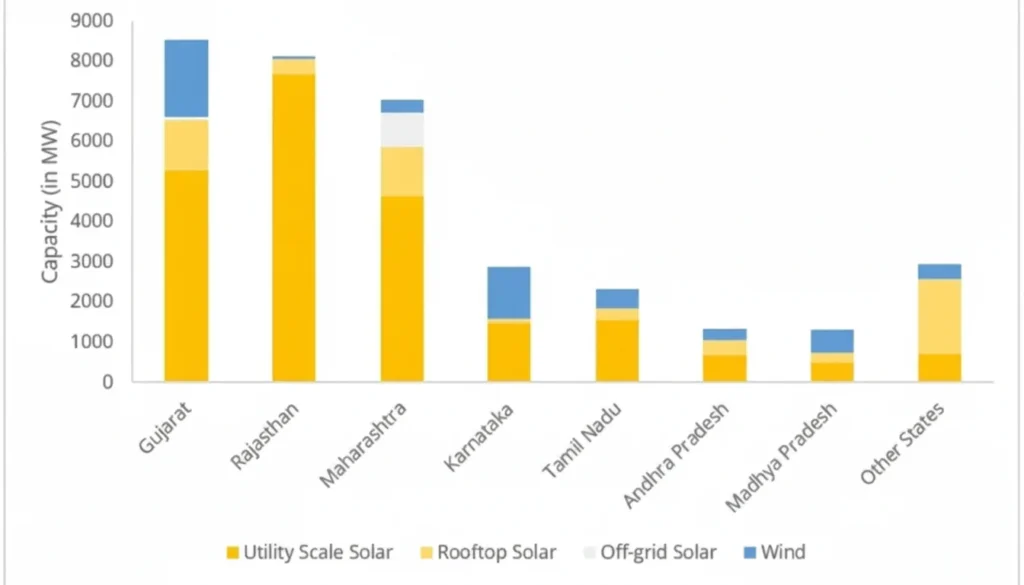
Furthermore, several states — including Rajasthan, Gujarat, and Karnataka — have become solar powerhouses due to favorable land policies, transmission infrastructure, and investor-friendly regulations. Rajasthan, for example, continued to lead the country in total solar installations, leveraging its vast desert terrain and high irradiation levels to attract large-scale projects.
The government’s ‘One Sun, One World, One Grid’ (OSOWOG) initiative also continues to shape India’s global solar vision by integrating renewable energy across borders and positioning the country as a regional clean power hub.
Private investment has been a cornerstone of India’s solar success story. In 2025, both domestic and international developers accelerated their project pipelines amid growing investor confidence and stable policy frameworks. Companies have been particularly motivated by declining module prices, improved solar park infrastructure, and increased financing availability from green funds and multilateral agencies.
The domestic manufacturing sector has also experienced robust growth. With the government’s PLI scheme encouraging local module and cell production, India is gradually reducing its dependence on imports. Major expansions in solar component manufacturing across states like Tamil Nadu, Gujarat, and Andhra Pradesh are expected to bolster the entire value chain and make the sector more self-reliant.
While utility-scale projects dominate, rooftop solar installations have been gaining significant traction in 2025. The commercial and industrial (C&I) sectors, in particular, have turned to solar as a means to cut operational costs and meet sustainability goals.
According to industry analysts, rooftop installations accounted for around 5 GW of the total capacity added during the first three quarters of 2025 — a notable rise compared to previous years. This growth has been driven by increasing awareness among small businesses, easier financing mechanisms, and digital platforms that simplify project implementation and monitoring.
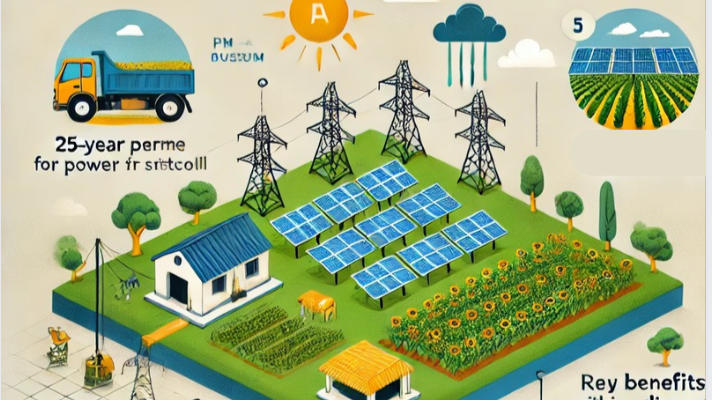
Additionally, agricultural solar programs under the KUSUM scheme have helped rural communities access affordable power while reducing pressure on the conventional grid.
Despite this record-setting growth, India’s solar expansion is not without challenges. The integration of such large-scale renewable energy into the grid continues to test the country’s transmission and storage infrastructure.
Experts emphasize the need for advanced grid management systems, energy storage solutions, and real-time monitoring to handle intermittency and variability in solar generation. In some states, delays in transmission line development have caused temporary curtailments, highlighting the importance of synchronized infrastructure planning.
The government and private sector are addressing these concerns through initiatives such as the Green Energy Corridor, Battery Energy Storage Systems (BESS) pilot projects, and digital grid management technologies. These efforts aim to enhance flexibility and reliability across the power network as solar penetration increases.
Alongside solar power, India has also made commendable progress in wind energy. Data from Bluebird Solar highlights that 4.96 GW of new wind capacity was installed during the first nine months of 2025. While this figure is modest compared to solar, it represents a steady recovery in the wind sector after several years of stagnation.
The combination of solar and wind installations — totaling over 34 GW of new renewable capacity in just nine months — positions India as one of the world’s fastest-growing clean energy markets. Hybrid projects that integrate both solar and wind generation are becoming increasingly popular, offering higher utilization rates and more consistent power output.
The surge in solar installations has broad economic implications. It has created thousands of new jobs across engineering, manufacturing, construction, and maintenance sectors. Local economies in states like Rajasthan and Gujarat have particularly benefited from renewable energy parks that attract infrastructure investment and ancillary businesses.
From an environmental perspective, the 29.5 GW of new solar capacity is expected to offset approximately 40 million tonnes of carbon dioxide emissions annually, a significant contribution toward India’s net-zero by 2070 commitment. The reduced reliance on coal-fired power also improves air quality and enhances public health outcomes in many regions.
As India continues to scale up renewables, policy consistency and transparent regulations remain critical. The Electricity (Amendment) Bill, Green Open Access Rules, and Renewable Energy Certificates (REC) mechanism are helping streamline market operations and incentivize cleaner energy adoption.
Experts anticipate that the upcoming National Renewable Energy Policy will further harmonize state-level regulations and open up new opportunities for private investment in energy storage, grid management, and hybrid power systems.
Moreover, the central government’s push for solarization of railways, airport energy neutrality, and public sector green mandates ensures that solar energy’s influence extends well beyond the power sector, integrating sustainability into broader national development goals.
Looking ahead, India’s renewable trajectory appears stronger than ever. With numerous large-scale solar parks in the pipeline and increased domestic production capacity, the country is poised to surpass 40 GW of annual solar additions in the near future.
Analysts forecast that by 2030, India could achieve 300–320 GW of solar power capacity, far exceeding its initial target of 280 GW. The combination of supportive policies, maturing technologies, and a competitive private sector will continue to shape this growth story.
However, the focus must remain on balancing expansion with reliability. Ensuring adequate transmission networks, promoting energy storage adoption, and enhancing regulatory clarity will be key to sustaining momentum.
India’s installation of 29.5 GW of solar capacity in the first nine months of 2025 marks a defining moment in its renewable energy journey. It reflects not just impressive statistics but a deeper structural transformation in how the nation generates, distributes, and consumes energy.
With nearly 5 GW of wind power added alongside solar, India is moving closer to its clean energy ambitions while bolstering economic growth, job creation, and environmental resilience. The record-breaking year underscores the success of coordinated efforts between government policy, private investment, and technological innovation.
If current trends continue, India’s solar and broader renewable ecosystem will not only meet domestic energy demands sustainably but also emerge as a global model for large-scale, inclusive, and forward-looking energy transition.
For readers and professionals who want to stay updated with the latest developments, policy insights, and data-backed analyses in renewable energy, Solar Journal Hub offers in-depth coverage, expert opinions, and comprehensive reports on the fast-evolving solar industry. The platform continues to spotlight key trends, innovations, and milestones shaping India’s clean energy future.
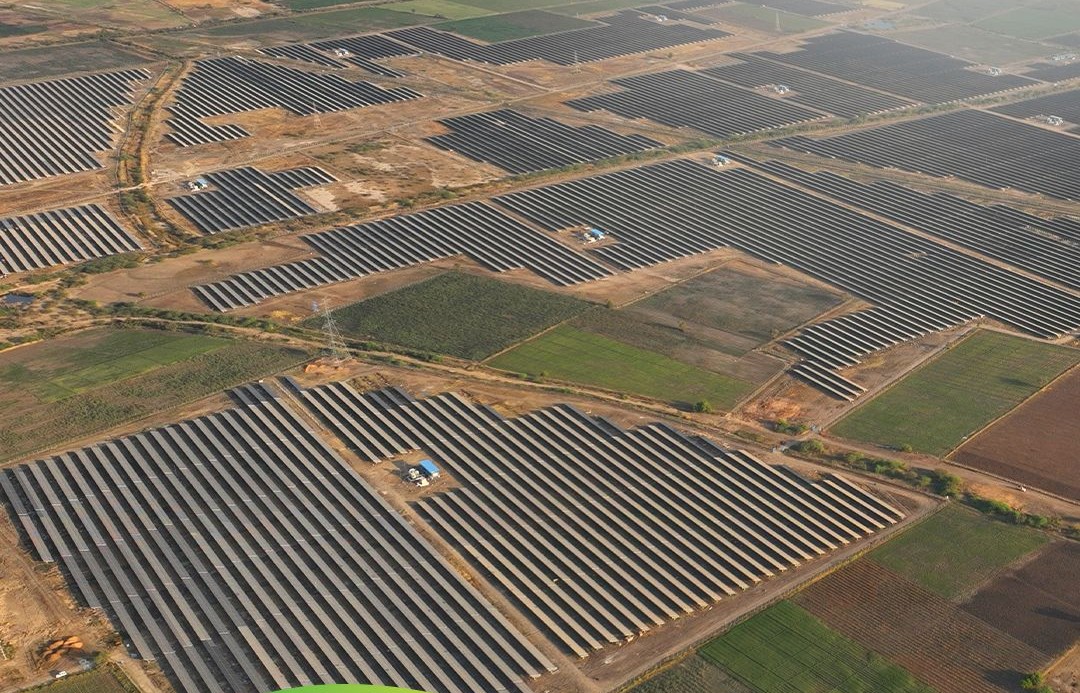
India’s renewable energy landscape reached a significant milestone in 2025, setting a new record for solar power capacity additions. According to multiple industry reports, the country installed a remarkable 29.5 gigawatts (GW) of solar energy capacity during the first nine months of the year. This achievement represents one of the largest annual growth spurts in India’s solar history and underscores the country’s accelerating transition toward a clean energy future.
The 29.5 GW installed between January and September 2025 marks a sharp increase compared to the same period in 2024, when installations stood at around 17 GW. This surge demonstrates India’s growing commitment to renewable energy, driven by both national policy support and falling solar technology costs.
Reports from leading industry trackers such as PV Magazine and PV Knowhow note that this growth has propelled India’s total cumulative solar capacity to well over 110 GW, putting the nation on track to meet — and potentially exceed — its ambitious renewable energy targets before 2030.
Much of this growth can be attributed to utility-scale projects, which accounted for nearly three-quarters of total installations. However, the rooftop solar and distributed generation segments have also contributed meaningfully, buoyed by state-level incentives and net metering reforms that have made small-scale solar increasingly attractive to residential and commercial users.
India’s rapid solar expansion in 2025 aligns closely with the central government’s renewed focus on energy independence and decarbonization. Programs under the National Solar Mission, alongside the Production-Linked Incentive (PLI) scheme for domestic solar manufacturing, have played pivotal roles in boosting capacity additions.
Furthermore, several states — including Rajasthan, Gujarat, and Karnataka — have become solar powerhouses due to favorable land policies, transmission infrastructure, and investor-friendly regulations. Rajasthan, for example, continued to lead the country in total solar installations, leveraging its vast desert terrain and high irradiation levels to attract large-scale projects.
The government’s ‘One Sun, One World, One Grid’ (OSOWOG) initiative also continues to shape India’s global solar vision by integrating renewable energy across borders and positioning the country as a regional clean power hub.
Private investment has been a cornerstone of India’s solar success story. In 2025, both domestic and international developers accelerated their project pipelines amid growing investor confidence and stable policy frameworks. Companies have been particularly motivated by declining module prices, improved solar park infrastructure, and increased financing availability from green funds and multilateral agencies.
The domestic manufacturing sector has also experienced robust growth. With the government’s PLI scheme encouraging local module and cell production, India is gradually reducing its dependence on imports. Major expansions in solar component manufacturing across states like Tamil Nadu, Gujarat, and Andhra Pradesh are expected to bolster the entire value chain and make the sector more self-reliant.
While utility-scale projects dominate, rooftop solar installations have been gaining significant traction in 2025. The commercial and industrial (C&I) sectors, in particular, have turned to solar as a means to cut operational costs and meet sustainability goals.
According to industry analysts, rooftop installations accounted for around 5 GW of the total capacity added during the first three quarters of 2025 — a notable rise compared to previous years. This growth has been driven by increasing awareness among small businesses, easier financing mechanisms, and digital platforms that simplify project implementation and monitoring.
Additionally, agricultural solar programs under the KUSUM scheme have helped rural communities access affordable power while reducing pressure on the conventional grid.
Despite this record-setting growth, India’s solar expansion is not without challenges. The integration of such large-scale renewable energy into the grid continues to test the country’s transmission and storage infrastructure.
Experts emphasize the need for advanced grid management systems, energy storage solutions, and real-time monitoring to handle intermittency and variability in solar generation. In some states, delays in transmission line development have caused temporary curtailments, highlighting the importance of synchronized infrastructure planning.
The government and private sector are addressing these concerns through initiatives such as the Green Energy Corridor, Battery Energy Storage Systems (BESS) pilot projects, and digital grid management technologies. These efforts aim to enhance flexibility and reliability across the power network as solar penetration increases.
Alongside solar power, India has also made commendable progress in wind energy. Data from Bluebird Solar highlights that 4.96 GW of new wind capacity was installed during the first nine months of 2025. While this figure is modest compared to solar, it represents a steady recovery in the wind sector after several years of stagnation.
The combination of solar and wind installations — totaling over 34 GW of new renewable capacity in just nine months — positions India as one of the world’s fastest-growing clean energy markets. Hybrid projects that integrate both solar and wind generation are becoming increasingly popular, offering higher utilization rates and more consistent power output.
The surge in solar installations has broad economic implications. It has created thousands of new jobs across engineering, manufacturing, construction, and maintenance sectors. Local economies in states like Rajasthan and Gujarat have particularly benefited from renewable energy parks that attract infrastructure investment and ancillary businesses.
From an environmental perspective, the 29.5 GW of new solar capacity is expected to offset approximately 40 million tonnes of carbon dioxide emissions annually, a significant contribution toward India’s net-zero by 2070 commitment. The reduced reliance on coal-fired power also improves air quality and enhances public health outcomes in many regions.
As India continues to scale up renewables, policy consistency and transparent regulations remain critical. The Electricity (Amendment) Bill, Green Open Access Rules, and Renewable Energy Certificates (REC) mechanism are helping streamline market operations and incentivize cleaner energy adoption.
Experts anticipate that the upcoming National Renewable Energy Policy will further harmonize state-level regulations and open up new opportunities for private investment in energy storage, grid management, and hybrid power systems.
Moreover, the central government’s push for solarization of railways, airport energy neutrality, and public sector green mandates ensures that solar energy’s influence extends well beyond the power sector, integrating sustainability into broader national development goals.
Looking ahead, India’s renewable trajectory appears stronger than ever. With numerous large-scale solar parks in the pipeline and increased domestic production capacity, the country is poised to surpass 40 GW of annual solar additions in the near future.
Analysts forecast that by 2030, India could achieve 300–320 GW of solar power capacity, far exceeding its initial target of 280 GW. The combination of supportive policies, maturing technologies, and a competitive private sector will continue to shape this growth story.
However, the focus must remain on balancing expansion with reliability. Ensuring adequate transmission networks, promoting energy storage adoption, and enhancing regulatory clarity will be key to sustaining momentum.
India’s installation of 29.5 GW of solar capacity in the first nine months of 2025 marks a defining moment in its renewable energy journey. It reflects not just impressive statistics but a deeper structural transformation in how the nation generates, distributes, and consumes energy.
With nearly 5 GW of wind power added alongside solar, India is moving closer to its clean energy ambitions while bolstering economic growth, job creation, and environmental resilience. The record-breaking year underscores the success of coordinated efforts between government policy, private investment, and technological innovation.
If current trends continue, India’s solar and broader renewable ecosystem will not only meet domestic energy demands sustainably but also emerge as a global model for large-scale, inclusive, and forward-looking energy transition.
For readers and professionals who want to stay updated with the latest developments, policy insights, and data-backed analyses in renewable energy, Solar Journal Hub offers in-depth coverage, expert opinions, and comprehensive reports on the fast-evolving solar industry. The platform continues to spotlight key trends, innovations, and milestones shaping India’s clean energy future.
Copyright Solar Journal Hub. 2025