RECENT NEWS

Table of Content

Why Rajasthan Leads in Solar Energy?

Why Rajasthan Leads in Solar Energy: A Model for India’s Renewable Future

Rajasthan, India’s largest state by area, has long been known for its golden deserts, majestic forts, and cultural heritage. Today, it is recognized for something far more futuristic — its leadership in solar energy. Over the last decade, Rajasthan has transformed itself into the solar capital of India, setting benchmarks in renewable energy production, policy innovation, and sustainable growth.

The state’s journey from vast barren land to a thriving hub of solar installations is a story of vision, planning, and commitment. Let’s explore the key factors that have helped Rajasthan emerge as India’s top performer in the solar energy sector.

1. The Natural Advantage: Geography and Climate

Rajasthan’s leadership in solar energy begins with its natural geography. The state receives an average of 5.5 to 6 kilowatt-hours per square meter per day of solar radiation, one of the highest levels in the country. With more than 325 sunny days a year, it provides ideal conditions for large-scale solar power generation.

The Thar Desert, covering nearly 200,000 square kilometers, offers vast expanses of unused land, perfect for installing solar farms. Unlike other regions, land acquisition is easier here due to low population density and minimal agricultural activity. These natural conditions make Rajasthan not just suitable, but strategically optimal for harnessing solar power.

2. Policy Push and Government Initiatives

Behind Rajasthan’s solar success lies a robust policy framework and proactive governance. The Rajasthan Renewable Energy Corporation Limited (RRECL) has been instrumental in creating favorable conditions for investors, developers, and innovators.

The Rajasthan Solar Energy Policy 2019 introduced key incentives such as:

  • Simplified project approvals and single-window clearance systems.
  • Exemption from electricity duty and wheeling charges for renewable power plants.
  • Priority land allocation for solar parks.
  • Support for hybrid energy projects, combining solar with wind or storage technologies.

These measures reflect a long-term commitment toward achieving the state’s renewable energy targets under India’s National Solar Mission.

3. Large-Scale Solar Parks: The Cornerstones of Success

Rajasthan’s dominance in solar power is further amplified by its large solar parks, which have become models for efficient implementation. Some of the most notable include:

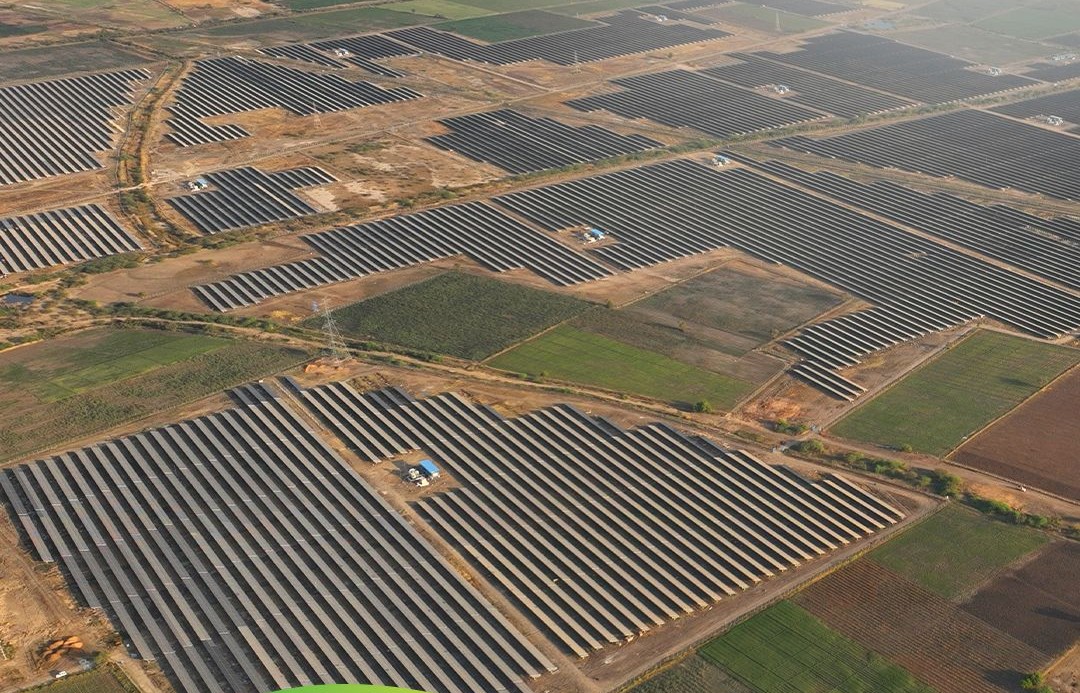
  • Bhadla Solar Park (Jodhpur) – Spanning over 14,000 acres, this park is among the largest in the world, with a total capacity exceeding 2,245 megawatts (MW). The high solar irradiance and stable grid connectivity make it a global benchmark.
  • Phalodi-Pokaran Solar Park – This park, located in the heart of the desert, has attracted multiple developers due to its favorable climate and state support.
  • Suratgarh and Nokh Solar Projects – Newer projects are now expanding capacity and diversifying Rajasthan’s solar map across different districts.

Together, these mega projects have helped Rajasthan achieve an installed solar capacity of over 18 gigawatts (GW), surpassing all other Indian states and contributing significantly to India’s renewable targets.

4. Private Investment and Public-Private Collaboration

One of the biggest strengths of Rajasthan’s solar journey is the strong participation of private players. Through a transparent bidding process and investor-friendly policies, the state has attracted some of India’s largest energy companies, international developers, and green investors.

Public-private partnerships have been instrumental in ensuring project financing, technology adoption, and timely completion. Rajasthan’s openness to foreign direct investment (FDI) and emphasis on ease of doing business have turned it into a magnet for renewable energy entrepreneurs.

Furthermore, initiatives like solar parks under the PPP model have helped distribute both risks and rewards effectively. This synergy between policy and private investment has accelerated the pace of solar adoption beyond expectations.

5. Infrastructure and Transmission Readiness

Solar power generation is only one part of the equation — getting that power to the grid efficiently is another. Rajasthan’s progress would not have been possible without significant upgrades in infrastructure and power evacuation systems.

The Green Energy Corridor project, backed by both central and state governments, has strengthened transmission capacity across major solar zones. With modern substations, dedicated transmission lines, and energy storage pilot projects, Rajasthan ensures that the power generated reaches national and regional grids without major losses.

The state’s focus on integrating smart grid technologies and digital monitoring further enhances operational efficiency and reliability, setting new standards for renewable infrastructure management in India.

6. Employment, Skill Development, and Local Impact

Solar energy development has not only transformed Rajasthan’s power landscape but also uplifted its economy and communities. Thousands of jobs have been created in project development, maintenance, logistics, and engineering services.

Training programs under initiatives like Skill India and state-level vocational schemes have equipped youth with expertise in solar panel installation, operations, and repair. Local businesses benefit through increased demand for materials, construction, and hospitality services around project sites.

Moreover, solar energy has brought electrification to remote areas where conventional grid extension was impractical. This has improved quality of life, boosted small businesses, and enabled access to education and healthcare services in off-grid villages.

7. Environmental and Economic Benefits

The transition toward solar energy has yielded profound environmental dividends for Rajasthan. Reduced dependence on coal-fired power plants has led to lower carbon emissions and improved air quality.

Economically, solar energy has reduced the state’s electricity deficit and made it a net supplier of clean power to the national grid. The cost of solar electricity has fallen dramatically, now competing with — and often cheaper than — conventional energy sources.

The state’s policies encouraging rooftop solar systems and solar water pumps for agriculture have further decentralized power generation and made rural communities more energy independent.

8. Research, Innovation, and the Future of Solar in Rajasthan

Rajasthan’s success is not just about scale — it’s about innovation. Research collaborations between universities, private firms, and government agencies have focused on improving solar panel efficiency, battery storage, and desert-adapted technologies.

Emerging trends such as floating solar farms on reservoirs, bifacial panels, and hybrid solar-wind systems are gaining traction. With global climate commitments tightening, Rajasthan’s potential is expanding beyond energy generation to become a hub for solar research, manufacturing, and export.

The future of solar energy in Rajasthan looks even brighter as the state aims to reach 30 GW of renewable capacity in the next few years. As per official plans, this will include not only utility-scale plants but also community-based and distributed solar systems.

9. Challenges and the Road Ahead

While Rajasthan’s solar journey is impressive, it is not without challenges. Issues such as land use conflicts, water scarcity for cleaning panels, and storage limitations remain critical. The intermittent nature of solar power calls for better energy storage technologies and grid balancing solutions.

However, the state’s proactive approach — including exploring solar-wind hybrid models and battery integration — shows its commitment to tackling these issues head-on. Continued investment in research, infrastructure, and local capacity will ensure that Rajasthan remains at the forefront of India’s green revolution.

Conclusion: A Blueprint for a Sustainable Future

Rajasthan’s story is a testament to what vision, policy, and natural potential can achieve when aligned with sustainability goals. From the vast deserts of Bhadla to the remote villages powered by rooftop panels, the state has turned sunlight into progress — clean, affordable, and scalable.

As India strives to achieve its ambitious renewable energy targets, Rajasthan stands as a blueprint for other states — demonstrating that clean energy is not only an environmental necessity but also an economic opportunity.

By embracing innovation, empowering local communities, and maintaining policy consistency, Rajasthan has proven that the path to a sustainable future can be both profitable and planet-friendly.
Yushmita

Why Rajasthan Leads in Solar Energy?

Why Rajasthan Leads in Solar Energy: A Model for India’s Renewable Future

Rajasthan, India’s largest state by area, has long been known for its golden deserts, majestic forts, and cultural heritage. Today, it is recognized for something far more futuristic — its leadership in solar energy. Over the last decade, Rajasthan has transformed itself into the solar capital of India, setting benchmarks in renewable energy production, policy innovation, and sustainable growth.

The state’s journey from vast barren land to a thriving hub of solar installations is a story of vision, planning, and commitment. Let’s explore the key factors that have helped Rajasthan emerge as India’s top performer in the solar energy sector.

1. The Natural Advantage: Geography and Climate

Rajasthan’s leadership in solar energy begins with its natural geography. The state receives an average of 5.5 to 6 kilowatt-hours per square meter per day of solar radiation, one of the highest levels in the country. With more than 325 sunny days a year, it provides ideal conditions for large-scale solar power generation.

The Thar Desert, covering nearly 200,000 square kilometers, offers vast expanses of unused land, perfect for installing solar farms. Unlike other regions, land acquisition is easier here due to low population density and minimal agricultural activity. These natural conditions make Rajasthan not just suitable, but strategically optimal for harnessing solar power.

2. Policy Push and Government Initiatives

Behind Rajasthan’s solar success lies a robust policy framework and proactive governance. The Rajasthan Renewable Energy Corporation Limited (RRECL) has been instrumental in creating favorable conditions for investors, developers, and innovators.

The Rajasthan Solar Energy Policy 2019 introduced key incentives such as:

  • Simplified project approvals and single-window clearance systems.
  • Exemption from electricity duty and wheeling charges for renewable power plants.
  • Priority land allocation for solar parks.
  • Support for hybrid energy projects, combining solar with wind or storage technologies.

These measures reflect a long-term commitment toward achieving the state’s renewable energy targets under India’s National Solar Mission.

3. Large-Scale Solar Parks: The Cornerstones of Success

Rajasthan’s dominance in solar power is further amplified by its large solar parks, which have become models for efficient implementation. Some of the most notable include:

  • Bhadla Solar Park (Jodhpur) – Spanning over 14,000 acres, this park is among the largest in the world, with a total capacity exceeding 2,245 megawatts (MW). The high solar irradiance and stable grid connectivity make it a global benchmark.
  • Phalodi-Pokaran Solar Park – This park, located in the heart of the desert, has attracted multiple developers due to its favorable climate and state support.
  • Suratgarh and Nokh Solar Projects – Newer projects are now expanding capacity and diversifying Rajasthan’s solar map across different districts.

Together, these mega projects have helped Rajasthan achieve an installed solar capacity of over 18 gigawatts (GW), surpassing all other Indian states and contributing significantly to India’s renewable targets.

4. Private Investment and Public-Private Collaboration

One of the biggest strengths of Rajasthan’s solar journey is the strong participation of private players. Through a transparent bidding process and investor-friendly policies, the state has attracted some of India’s largest energy companies, international developers, and green investors.

Public-private partnerships have been instrumental in ensuring project financing, technology adoption, and timely completion. Rajasthan’s openness to foreign direct investment (FDI) and emphasis on ease of doing business have turned it into a magnet for renewable energy entrepreneurs.

Furthermore, initiatives like solar parks under the PPP model have helped distribute both risks and rewards effectively. This synergy between policy and private investment has accelerated the pace of solar adoption beyond expectations.

5. Infrastructure and Transmission Readiness

Solar power generation is only one part of the equation — getting that power to the grid efficiently is another. Rajasthan’s progress would not have been possible without significant upgrades in infrastructure and power evacuation systems.

The Green Energy Corridor project, backed by both central and state governments, has strengthened transmission capacity across major solar zones. With modern substations, dedicated transmission lines, and energy storage pilot projects, Rajasthan ensures that the power generated reaches national and regional grids without major losses.

The state’s focus on integrating smart grid technologies and digital monitoring further enhances operational efficiency and reliability, setting new standards for renewable infrastructure management in India.

6. Employment, Skill Development, and Local Impact

Solar energy development has not only transformed Rajasthan’s power landscape but also uplifted its economy and communities. Thousands of jobs have been created in project development, maintenance, logistics, and engineering services.

Training programs under initiatives like Skill India and state-level vocational schemes have equipped youth with expertise in solar panel installation, operations, and repair. Local businesses benefit through increased demand for materials, construction, and hospitality services around project sites.

Moreover, solar energy has brought electrification to remote areas where conventional grid extension was impractical. This has improved quality of life, boosted small businesses, and enabled access to education and healthcare services in off-grid villages.

7. Environmental and Economic Benefits

The transition toward solar energy has yielded profound environmental dividends for Rajasthan. Reduced dependence on coal-fired power plants has led to lower carbon emissions and improved air quality.

Economically, solar energy has reduced the state’s electricity deficit and made it a net supplier of clean power to the national grid. The cost of solar electricity has fallen dramatically, now competing with — and often cheaper than — conventional energy sources.

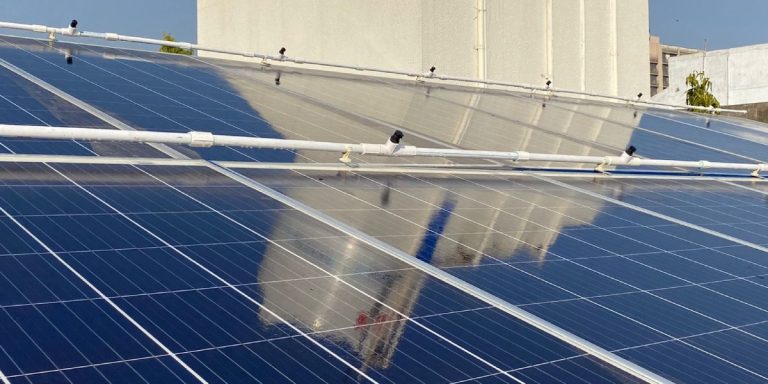
The state’s policies encouraging rooftop solar systems and solar water pumps for agriculture have further decentralized power generation and made rural communities more energy independent.

8. Research, Innovation, and the Future of Solar in Rajasthan

Rajasthan’s success is not just about scale — it’s about innovation. Research collaborations between universities, private firms, and government agencies have focused on improving solar panel efficiency, battery storage, and desert-adapted technologies.

Emerging trends such as floating solar farms on reservoirs, bifacial panels, and hybrid solar-wind systems are gaining traction. With global climate commitments tightening, Rajasthan’s potential is expanding beyond energy generation to become a hub for solar research, manufacturing, and export.

The future of solar energy in Rajasthan looks even brighter as the state aims to reach 30 GW of renewable capacity in the next few years. As per official plans, this will include not only utility-scale plants but also community-based and distributed solar systems.

9. Challenges and the Road Ahead

While Rajasthan’s solar journey is impressive, it is not without challenges. Issues such as land use conflicts, water scarcity for cleaning panels, and storage limitations remain critical. The intermittent nature of solar power calls for better energy storage technologies and grid balancing solutions.

However, the state’s proactive approach — including exploring solar-wind hybrid models and battery integration — shows its commitment to tackling these issues head-on. Continued investment in research, infrastructure, and local capacity will ensure that Rajasthan remains at the forefront of India’s green revolution.

Conclusion: A Blueprint for a Sustainable Future

Rajasthan’s story is a testament to what vision, policy, and natural potential can achieve when aligned with sustainability goals. From the vast deserts of Bhadla to the remote villages powered by rooftop panels, the state has turned sunlight into progress — clean, affordable, and scalable.

As India strives to achieve its ambitious renewable energy targets, Rajasthan stands as a blueprint for other states — demonstrating that clean energy is not only an environmental necessity but also an economic opportunity.

By embracing innovation, empowering local communities, and maintaining policy consistency, Rajasthan has proven that the path to a sustainable future can be both profitable and planet-friendly.

Yushmita

RECENT POSTS

CATEGORIES

Leave a Reply

Your email address will not be published. Required fields are marked *

At Solar Journal Hub, is to empower you with the knowledge to choose the ideal solar solution for your requirements. Let’s embark on your journey to a brighter, more sustainable future!

Copyright Solar Journal Hub. 2025

WhatsApp Icon